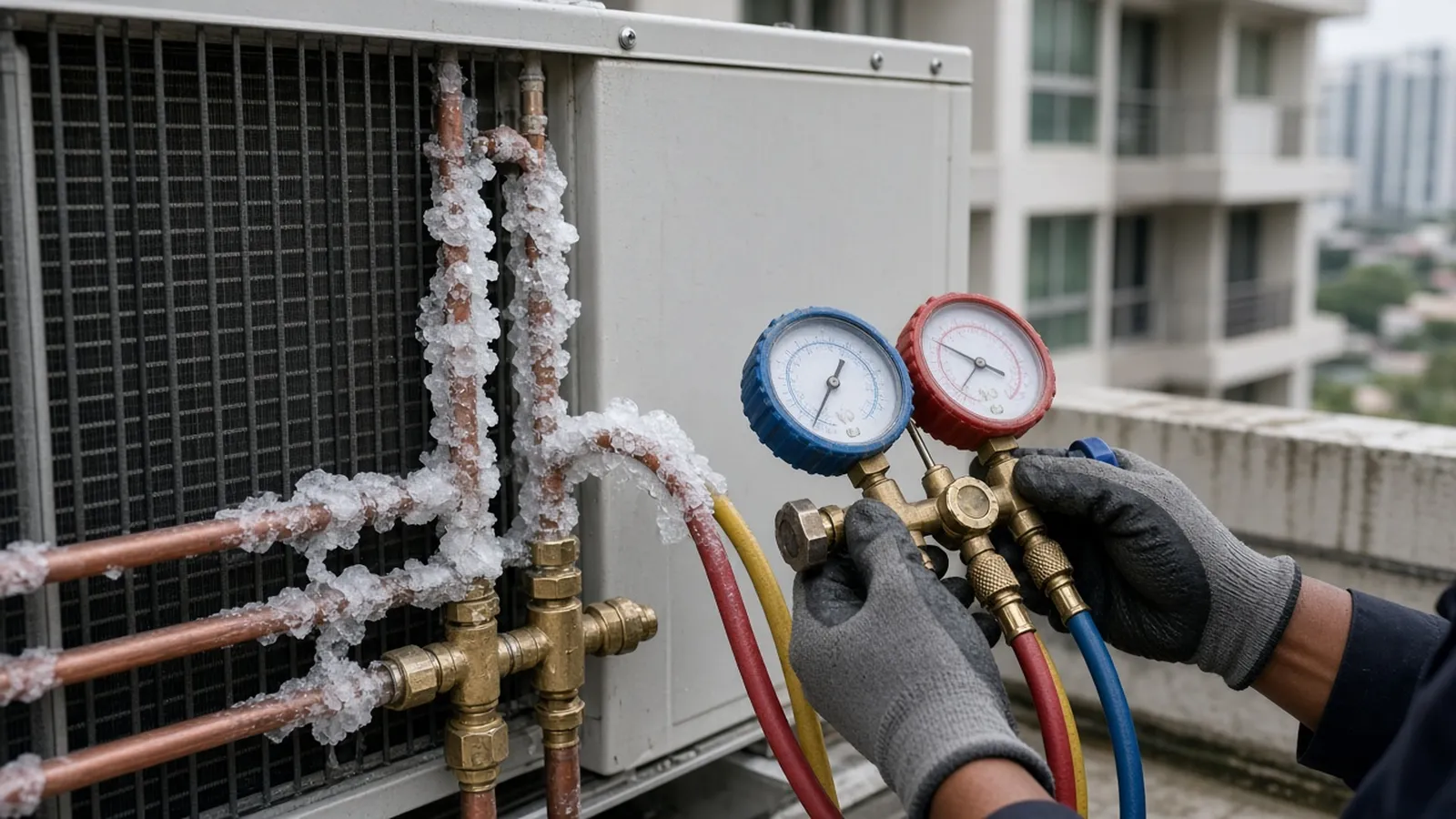
"Your aircon needs gas" is one of the most common things Singapore homeowners hear from technicians. Sometimes it's true. Sometimes it's a quick fix for a different problem. Knowing the signs helps you ask the right questions.
Gas doesn't get used up
An aircon's refrigerant, the "gas", moves around a sealed loop between the indoor and outdoor units. Unlike petrol in a car, it isn't burned off. If a unit is low, refrigerant has escaped somewhere: a loose flare joint, a pinhole in the copper pipe or a damaged coil.
Topping up without finding the leak may only work for a while. The gas leaves again, the room warms up, and you are back on the phone. Repeated top-ups are a clue that the leak is still there, not a sign that the unit "uses up" gas the way a car uses fuel.
That is why a careful technician checks pressure and looks for a leak before any refrigerant goes in. A top-up on its own is not a diagnosis.
On many multi-split systems the indoor units share the refrigerant from one outdoor condenser, so a leak can show up as weak cooling in more than one room. Don't assume each indoor head has its own separate gas supply. Ask the technician how your system is piped and which part they think is leaking.
Signs your unit may be low on gas
- Weak cooling, especially in the afternoon when it is hottest outside.
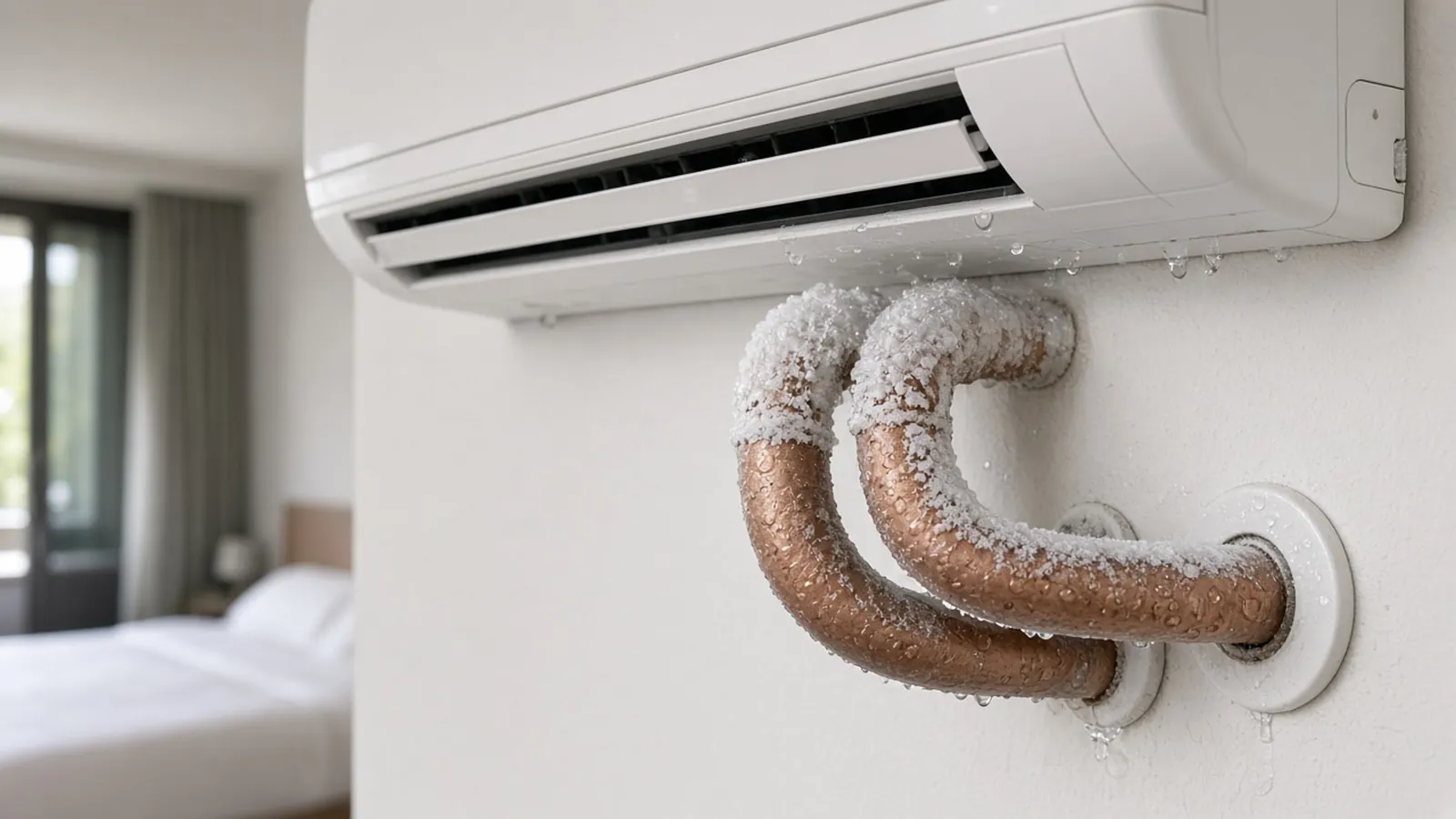
- Ice or frost on the copper pipes or the indoor coil.
- The outdoor unit runs but the room doesn't get properly cold.
- A hissing or bubbling sound near the pipes.
- Running much longer than before to reach the same temperature.
None of these signs is proof on its own. They are reasons to get the unit checked, not a DIY diagnosis. Ice in particular has more than one cause, which is why a pressure reading matters.
If you can see ice on the pipes or the indoor coil, switch the unit off and let it thaw before anyone inspects it. Running a unit while it is iced up is not a good idea, and it also makes a proper look at the coil harder. Put a towel down if water is going to drip as the ice melts.
Things that look like low gas but aren't
Several common problems produce the same symptoms:
- Dirty filters or coil. Poor airflow can also cause icing and weak cooling. A service or chemical wash may fix it.
- A dirty outdoor condenser. If the outdoor unit can't release heat, cooling drops. Leaves, construction dust and a grille stuffed with lint all make this worse.
- A failing capacitor or fan motor. These are electrical repairs, not a gas problem.
- Wrong remote settings, such as fan-only or dry mode. It sounds basic, but it is worth checking before anyone opens a toolbox.
A unit that hasn't been cleaned in a long time should be cleaned or at least inspected before anyone reaches for the refrigerant. Otherwise you may pay for gas when the real issue was a clogged coil.
What a good technician does
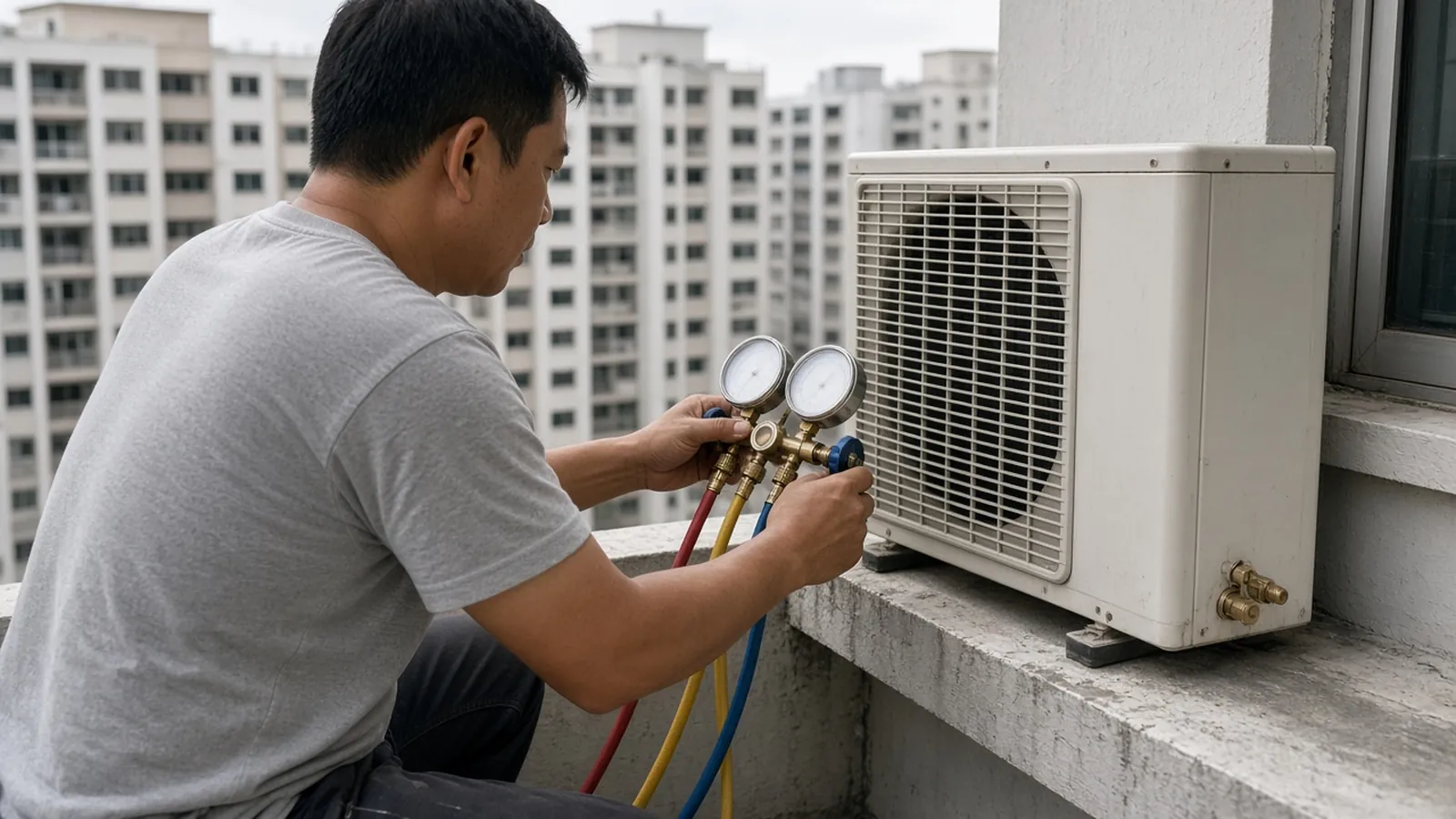
- Cleans or checks the filters and coil first, so dirt isn't mistaken for low gas.
- Connects gauges to read the system pressure.
- Looks for a leak if pressure is low, checking joints and pipes.
- Fixes the leak, or explains why it can't be fixed easily, before topping up.
- Tops up with the refrigerant your unit is designed for.
If the technician cannot find the leak on the spot, they should say so. Some leaks are small and show up only under a proper test. What you want to avoid is a shrug, a top-up, and no note of the pressure reading or the type of gas used.
In HDB flats the outdoor unit often sits on a ledge, sometimes behind a grille. The technician needs access to those service valves to read pressure. If the grille is locked, find the key before the visit, the same way you would for a normal service.
Which gas does your unit use?
Many newer units sold in Singapore use R32, and many older ones use R410A. Some much older systems use other types. The correct refrigerant is printed on the label on the outdoor unit. Mixing types is not a fix, so check that the technician is using the right one.
If the label is faded, the model number on that same plate is usually enough for the technician to look up the right refrigerant. Don't go by what the last company said they added unless it matches the label.
Questions to ask before you say yes
- What pressure reading did you get, and what should it be?
- Where do you think the leak is?
- Is the leak repair included, and is there a warranty on it?
- Is the price per unit, and does it depend on how much gas is added?
- Which refrigerant are you adding, and does it match the outdoor unit's label?
You are entitled to hear the answers before work starts. A good technician would rather show you a gauge than rush you into a yes.
We don't list gas prices here because they vary by company, by refrigerant and by how much is added. Ask for the figure in writing. Some published numbers from company websites appear on our prices page, each with a source and the date we checked. Those are not a quote for your unit.
If the problem comes back
If the room cools for a few weeks and then the same weak-cooling or icing returns, treat that as a leak that was not fixed, not as proof you need another top-up. Call the company that did the work, especially if there was a warranty on the gas or the leak repair, and ask them to look again.
A leaking coil can be expensive to repair and sometimes costs more than replacing the unit. We can't tell you which way to go without seeing the unit, and we won't invent a comparison. Ask the technician to explain the options and get a second quote if the first one feels thin on detail.
What you can safely check yourself
Before you book, you can do a few simple things:
- Confirm the remote is in cool mode, not fan or dry.
- Rinse the filters if they are dusty, then let them dry fully before putting them back. NEA says to check the air-conditioner air filter once a month and clean or replace it when necessary.
- Look at the outdoor unit and note whether the fan is spinning and whether the grille is clogged.
- Look at the copper pipes for ice or heavy condensation, without touching electrical parts.
Leave the gas itself alone. It needs gauges and training, and refrigerant should be handled by a technician.
When the technician is finished, ask them to run the unit for a few minutes before they leave. The room should start to feel cooler, the outdoor fan should be doing something useful, and there should not be fresh ice forming on the pipes. If they repaired a leak, get that in writing along with any warranty period. A verbal "should be fine now" is easy to forget when the same problem returns in a month.
A gas top-up is also not a substitute for regular cleaning. A unit can be low on refrigerant and dirty at the same time. If the filters or coil are clogged, sort that out as well or the same weak-cooling complaint will keep coming back for a different reason. Our guide to servicing intervals covers the cleaning side, including NEA's monthly filter check.
See companies that list a gas top-up or aircon repair on their own websites, or browse by area and the near-me map. If you haven't decided whether the unit just needs cleaning, start with how often to service and the company checklist.
Sources
- NEA, Energy Saving Tips by Appliance — check the air-conditioner air filter once a month and clean or replace it when necessary.