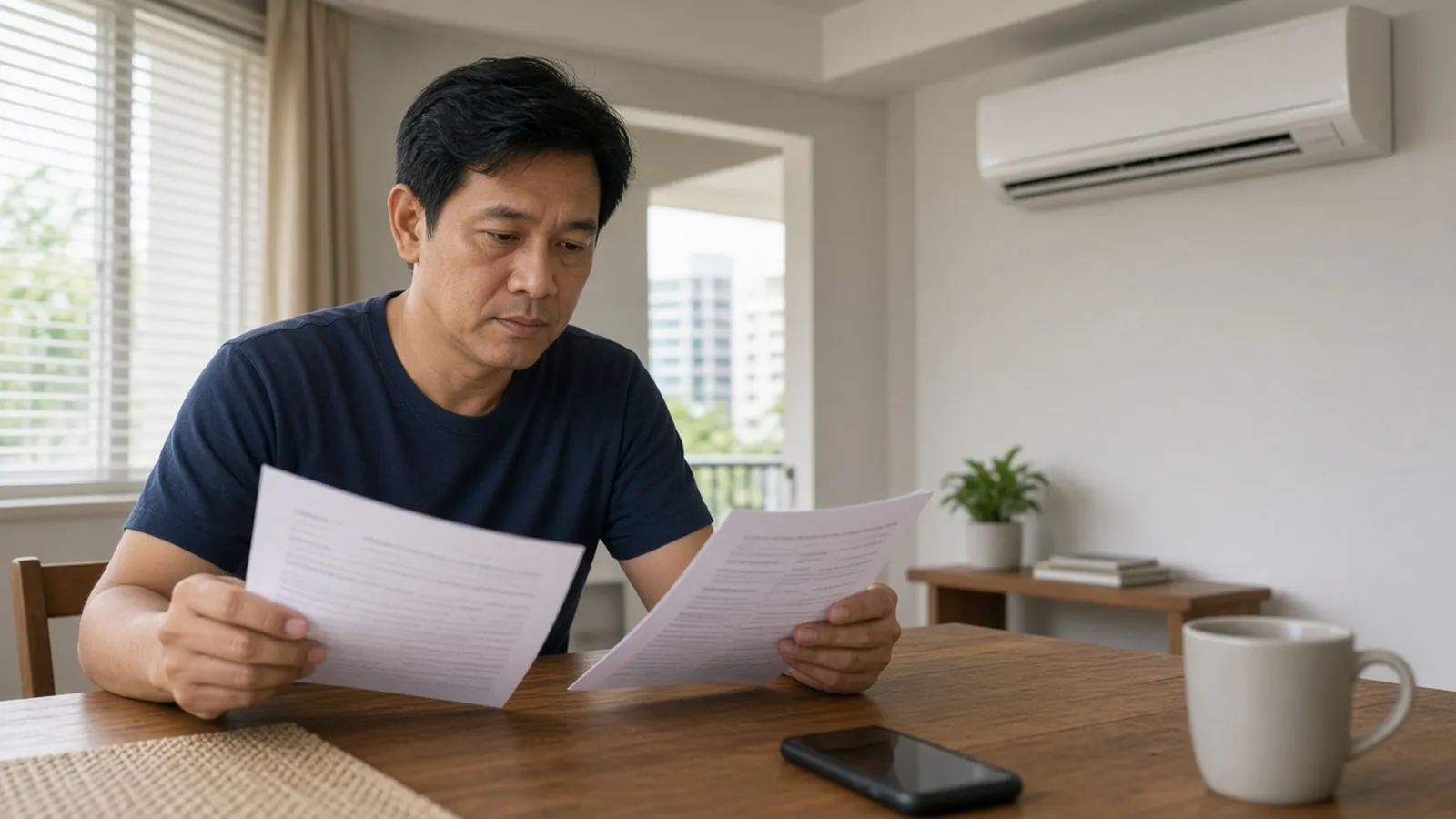
There are a lot of aircon companies in Singapore, from one-van outfits to firms with large teams. Most do honest work. A few rely on low headline prices and then add charges once a technician is in your home. A little preparation helps you pick well.
Before you call anyone
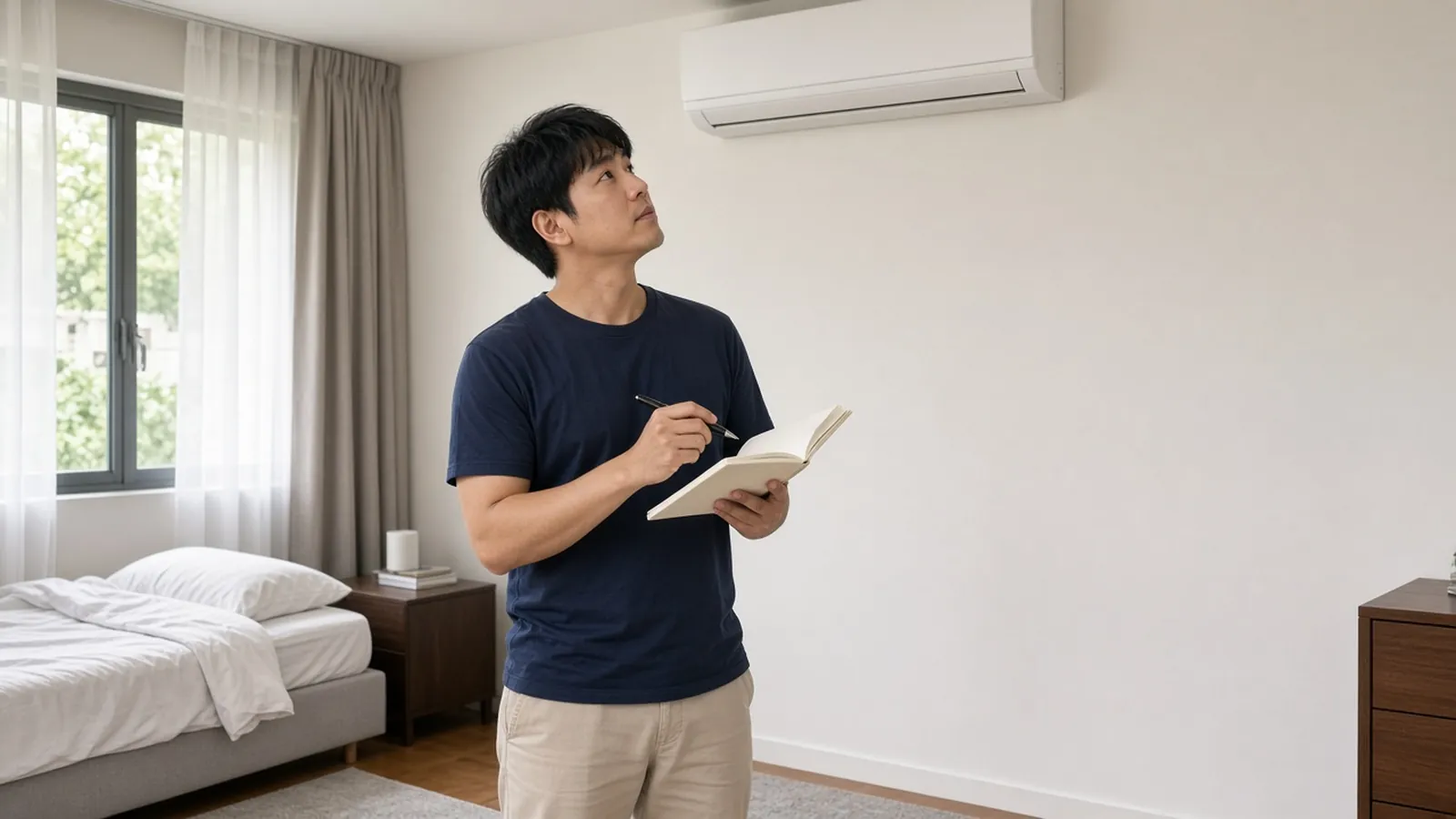
- Count your units. Note how many indoor units you have, and whether they are wall-mounted, ceiling cassette or ducted. A multi-split system still has several indoor heads, and quotes are often per indoor unit.
- Note the brand and rough age of each. The outdoor unit label usually shows the model. That label also shows the refrigerant type, which matters if anyone later suggests a gas top-up.
- Write down what's wrong, if anything: dripping, smell, weak cooling or noise. "Service all units" and "the master bedroom drips every night" are different jobs.
- Decide the job. Routine general service, a deeper clean, or a repair. Our wash vs overhaul guide can help you tell those two apart, and the servicing schedule guide covers how often people tend to book a general service.
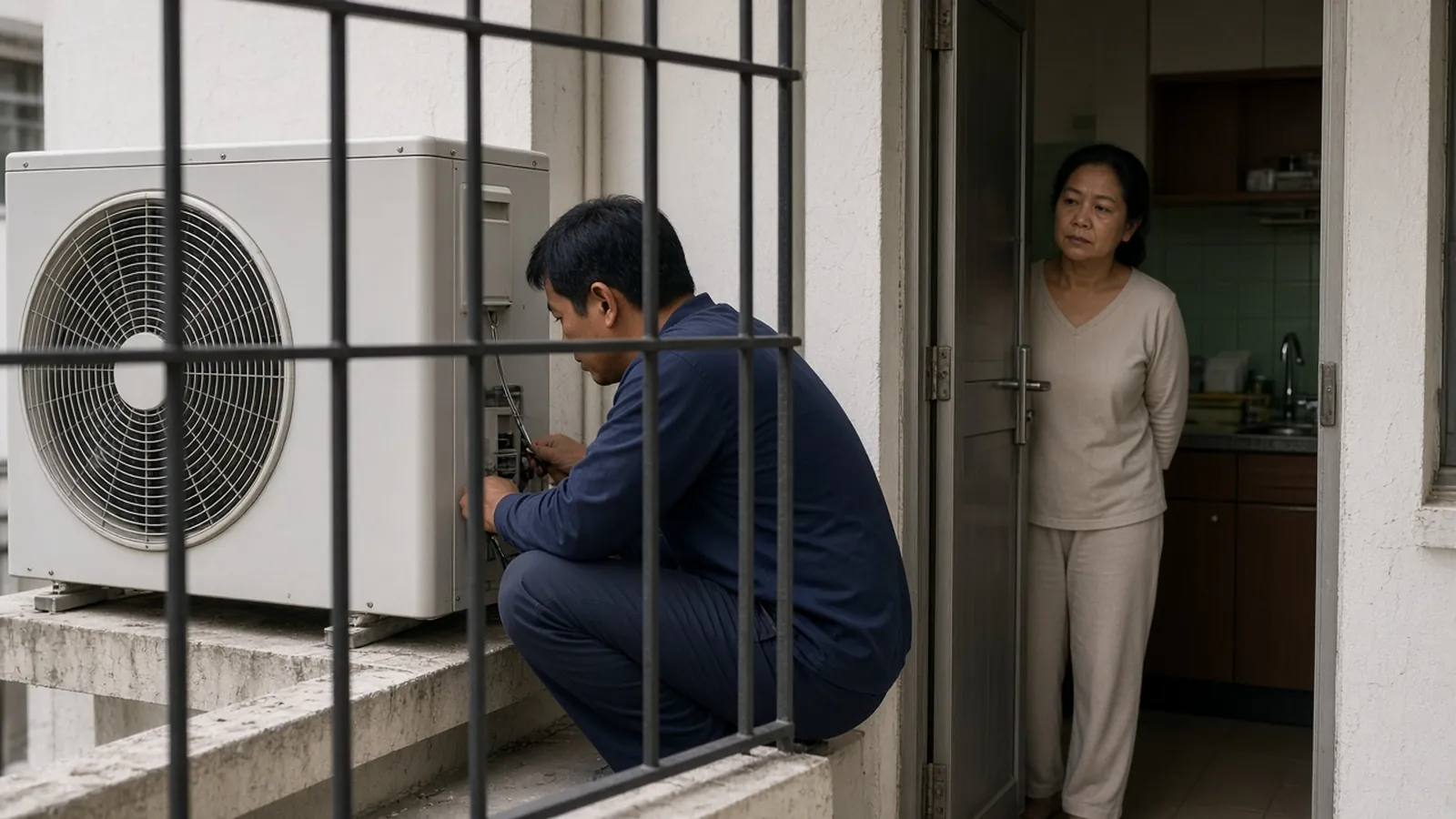
If you live in an HDB flat, think about access too. Outdoor condensers often sit on a ledge, sometimes behind a grille. If that grille needs a key, find it before the visit. A quote that assumes easy access can change if the technician cannot reach the outdoor unit.
Comparing quotes
Ask at least two companies to quote for the same job on the same units, in writing. WhatsApp is fine. Then compare like with like:
- Is the price per unit or for a package?
- Is the outdoor unit included?
- Is drain flushing included?
- Are there charges for ladders, high ledges or transport?
- Is there a warranty on the work, and for how long?
The cheapest quote isn't always the best value. A quote that leaves out the outdoor unit or drain line may cost more by the time the job is done.
This site copies prices that companies publish on their own websites onto our prices page, each with a link and the date we checked. Those figures are useful background. They are not a quote for your units, and they can leave out GST, transport or the outdoor unit. Always confirm with the company.
Questions worth asking
- How long has the company been servicing aircons?
- Will the same technician come for future visits?
- What happens if the unit still drips or smells after the service?
- For gas top-ups: will you check for a leak first? Our gas top-up guide explains why that question matters.
- For a chemical wash or overhaul: will the unit stay on the wall, and what warranty do you give on the work?
You don't need a long interrogation. A company that answers clearly in writing is already easier to deal with than one that only wants to talk once they are at your door.
Warning signs
- A very low price for a "full" service that turns out to cover very little.
- Pressure to agree to an overhaul or gas top-up on the spot, without being shown the problem.
- No written quote or receipt.
- Refusing to say which refrigerant they are adding.
You are entitled to ask to see the problem before agreeing to extra work. A good technician will show you the dirty coil or the pressure reading. If they will not, you can say no and get another quote. You are not obliged to approve extra work just because someone is already in your living room.
If the job is installation, not just servicing
Servicing an existing unit and installing a new one are different jobs, and the rules are stricter for installation in HDB flats.
HDB says home owners are responsible for the proper installation, safety and stability of air-conditioners in the flat, whether they are casement, window or split-type units. If you want to replace or install an air-conditioner, you must engage installers who have been trained by the Building and Construction Authority. Window units and split-type condensing units must be installed at approved locations, using approved methods. Details and the approved positions are on HDB's air-conditioner page.
After the work, an installation report has to be completed and sent to the HDB Branch that manages the flat within 14 days. HDB's installation report notes that, under the Building Control Regulations, anyone who wants to install an air-conditioning unit on the exterior of a building, or one that projects outwards, must engage a trained air-conditioning unit installer, and that a penalty can apply if that step is skipped or if the authorities are not informed.
HDB also says to engage an EMA-licensed electrical worker for electrical work. Your licensed electrical worker may apply for an Electrical/Air-Conditioner Installation Permit on your behalf, and you should only proceed after obtaining any permit that is required. That is set out on HDB's page about applying for renovation approval.
If you live in a condo, check with the management office before any installation or works that involve drilling or placing a condenser. Estate rules differ, and we don't list them here.
Browse firms that mention installation on their own websites if that is the job you need, and still ask whether the installer is BCA-trained when the work is in an HDB flat.
On the day
Clear the space under each indoor unit and make sure the technician can reach the outdoor unit. Keep pets away. When the work is done, run each unit for a few minutes and check that it cools and doesn't drip before the technician leaves.
If the visit was meant to be a general service and you are suddenly told every unit needs an overhaul, pause. Ask to see the coil and blower. You can approve extra work on one unit and leave the others for another day, or get a second opinion. There is no rule that says you have to decide everything in one afternoon.
After the visit
Keep the receipt and note the date. It helps you track when the next service is due and supports any warranty claim. If a problem comes back within the warranty period, contact the company first and give them a chance to fix it.
A short note on your phone is enough: date, company, which units, what was done (general service, wash, overhaul, gas, repair) and whether the outdoor unit was included. That record is more useful than trying to remember six months later.
If you are replacing a unit
Household air-conditioners sold in Singapore carry an NEA Energy Label. For single-phase air-conditioners the label rates efficiency from 1 tick (Low) to 5 ticks (Excellent). The label also shows an estimated annual energy cost based on 27 cents per kWh, 8 hours of daily use and 16 hours of standby, and it carries the disclaimer that actual energy consumption and cost may vary. See NEA's Energy Label page.
NEA raised Minimum Energy Performance Standards on 1 April 2025 to the 4-tick level for single-split air-conditioners and the 5-tick level for multi-split air-conditioners. That applies to models supplied from that date. Details are on NEA's MELS and MEPS page. NEA also advises consumers to buy only NEA-registered appliances from its Database of Registered Goods.
On how you use the unit, NEA suggests setting the temperature at 25°C and checking the filter once a month. Those tips sit on its energy-saving tips page, together with the assumptions behind the savings figures it publishes.
Sources
- HDB, Air-Conditioners — owners are responsible for proper installation; engage BCA-trained installers; approved locations and methods.
- HDB air-conditioning unit installation report (form AC-02) — submit to the managing HDB Branch within 14 days; trained installer required under the Building Control Regulations.
- HDB, Applying for Approval — engage an EMA-licensed electrical worker for electrical work; a licensed electrical worker may apply for the Electrical/Air-Conditioner Installation Permit.
- NEA, The Energy Label and About MELS and MEPS.
- NEA, Energy Saving Tips by Appliance.
Ready to compare? Browse companies by area, by service, or on the near-me map. Every company in this directory has a confirmed address and a website we could read. We don't rank them or sell featured spots on these guide pages.