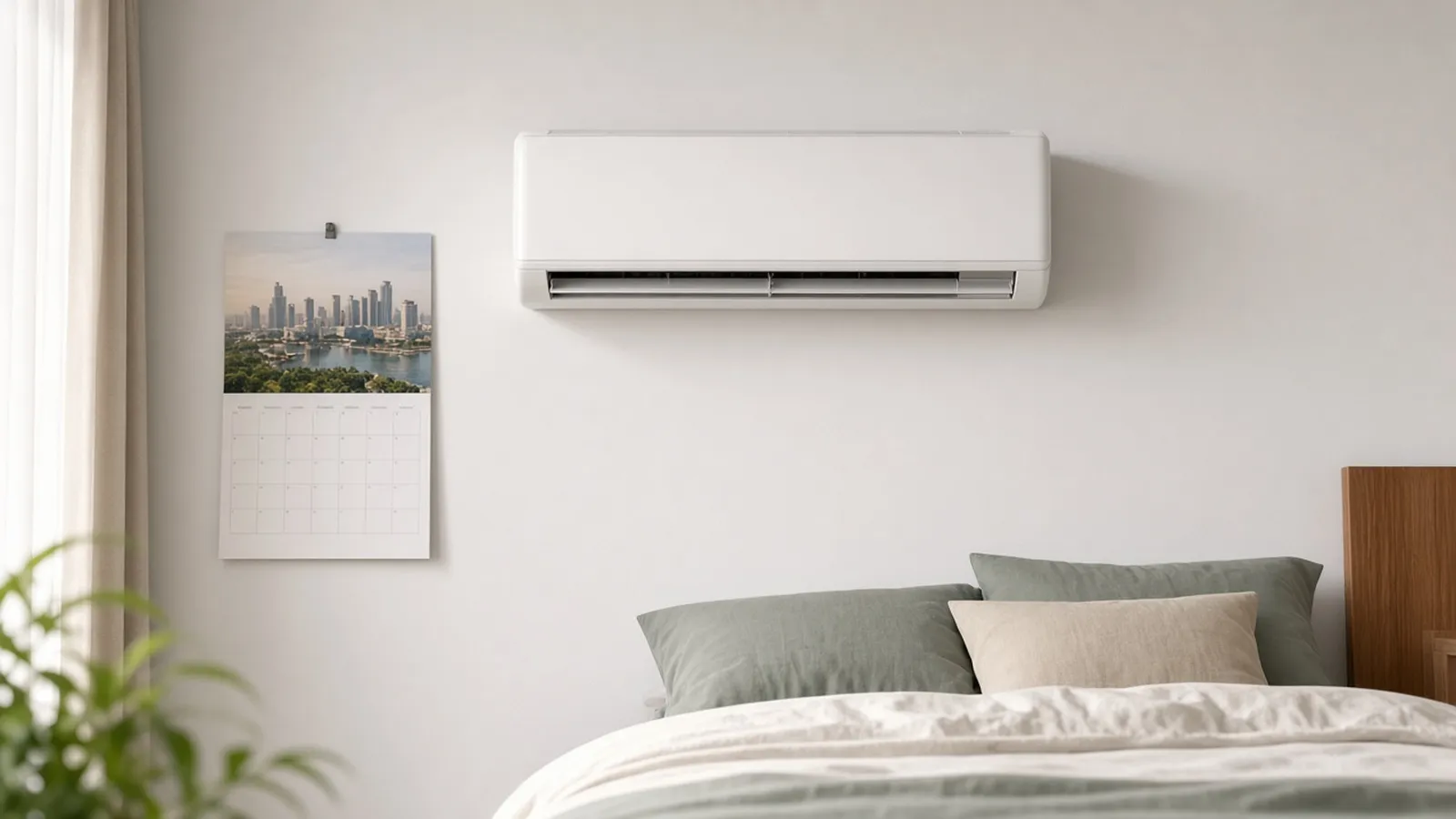
Ask five aircon companies how often you should service your units and you may get five slightly different answers. That isn't a trick. The right interval depends on how hard each unit works, and in Singapore most units work hard, because the weather gives them no off-season.
Start with how you actually use each unit
Walk around your home and think about each indoor unit on its own. The one in the master bedroom that runs eight hours every night is doing far more work than the one in the spare room that is switched on when relatives visit. Dust, skin flakes, cooking oil and pollen all end up on the filter and coil and the more air a unit moves the faster that happens.
If you have a multi-split system, one outdoor condenser serving several indoor heads, those indoor units still get dirty at different speeds. The outdoor unit runs whenever any indoor head is on, so a flat where something is cooling most of the day is also working the condenser hard.
A simple way to sort your units:
- Heavy use: runs most nights or most of the day, such as bedrooms and home offices.
- Medium use: on for a few hours on most days, such as living rooms.
- Light use: on now and then, such as guest rooms.
Heavy-use units are the ones to book first. Light-use units can often wait longer between visits, though they still collect dust and can grow mould if they sit damp and unused.
Wall-mounted fan coils are what most HDB flats and many condos use. Ceiling cassettes and ducted units hide more of the dirt, so you may notice a smell or weak airflow later than you would on a wall unit you walk past every day.
A common rhythm, not a rule
Many households in Singapore settle into a pattern of a general service every three to four months, with a deeper chemical wash about once a year. Companies often build their service contracts around a similar rhythm. Treat this as a starting point rather than a fixed timetable. If your units stay clean and cold for longer stretch the interval. If they start to smell or drip sooner, shorten it.
The National Environment Agency puts it in broader terms. On its energy-saving tips page, NEA says to service your air-conditioning units regularly and get them inspected annually, and to check the air filter once a month and clean or replace it when necessary so the unit runs efficiently. The monthly filter check is something most households can do themselves. The annual inspection is a useful floor, not a ceiling. A bedroom unit that runs every night in our climate usually needs more than one professional visit a year.
Your unit's manual is still the best guide for your specific model. If you no longer have the booklet, the model number is usually on a label on the indoor unit or the outdoor condenser.
Clean the filters yourself in between
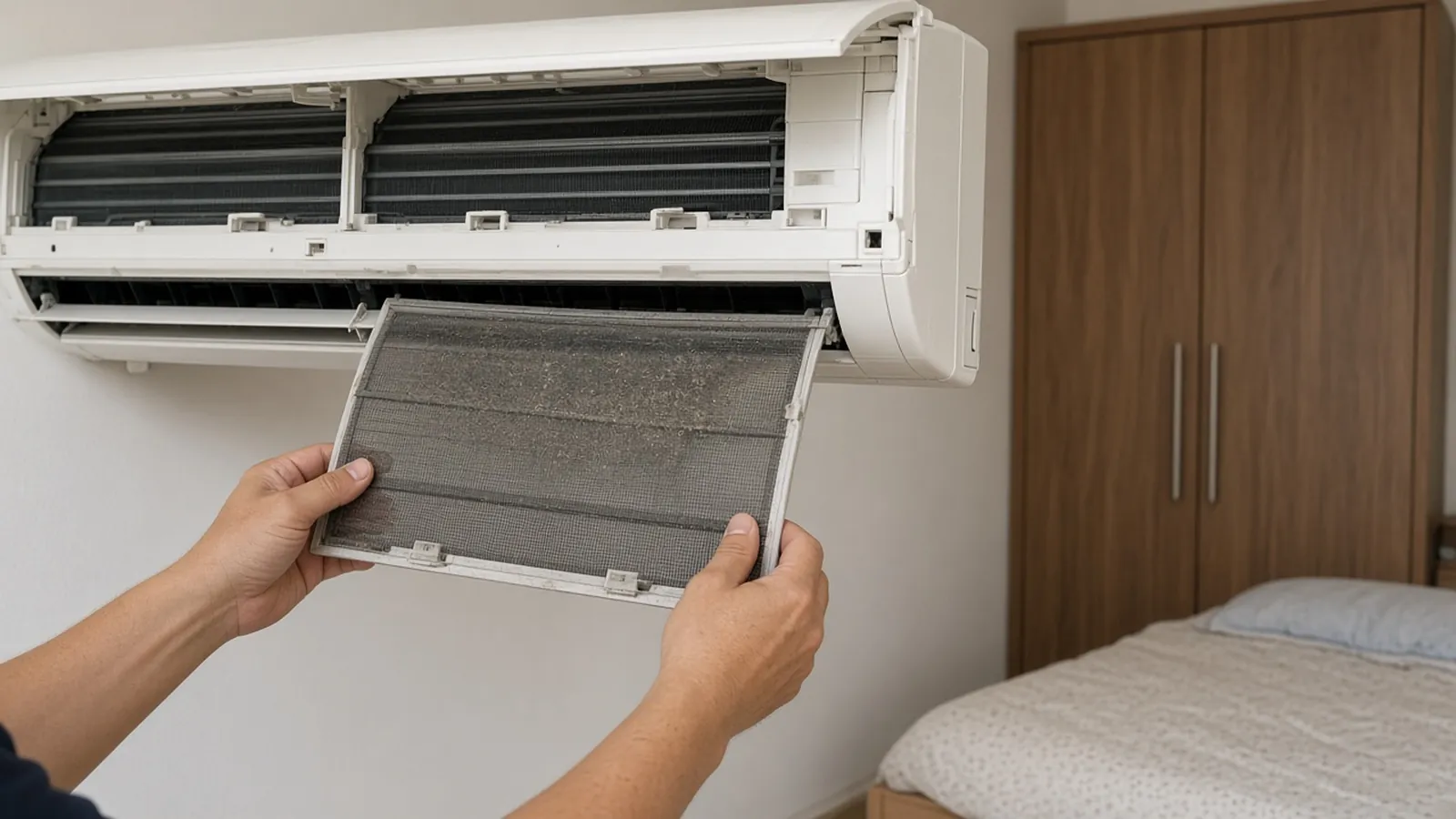
Most wall-mounted units let you lift the front panel and slide the filters out by hand. Rinsing them under the tap, letting them dry fully and putting them back takes a few minutes and helps airflow between professional visits. Check your manual first, and switch the unit off at the isolator before you open it.
A few practical points people skip:
- Let the filters dry completely before you slide them back. A damp filter is a good place for mould.
- Don't bend the mesh or scrub it with anything sharp.
- Leave the coil, blower wheel and drain line to the technician. Those parts sit deeper in the unit and are easy to damage if you poke at them.
- If the front panel doesn't lift the way the manual describes, stop rather than force it.
Filter cleaning is not a substitute for a general service. A service also flushes the drain, cleans parts you can't reach from the front and, if the technician does it properly, takes a look at the outdoor unit.
Things that make units dirty faster
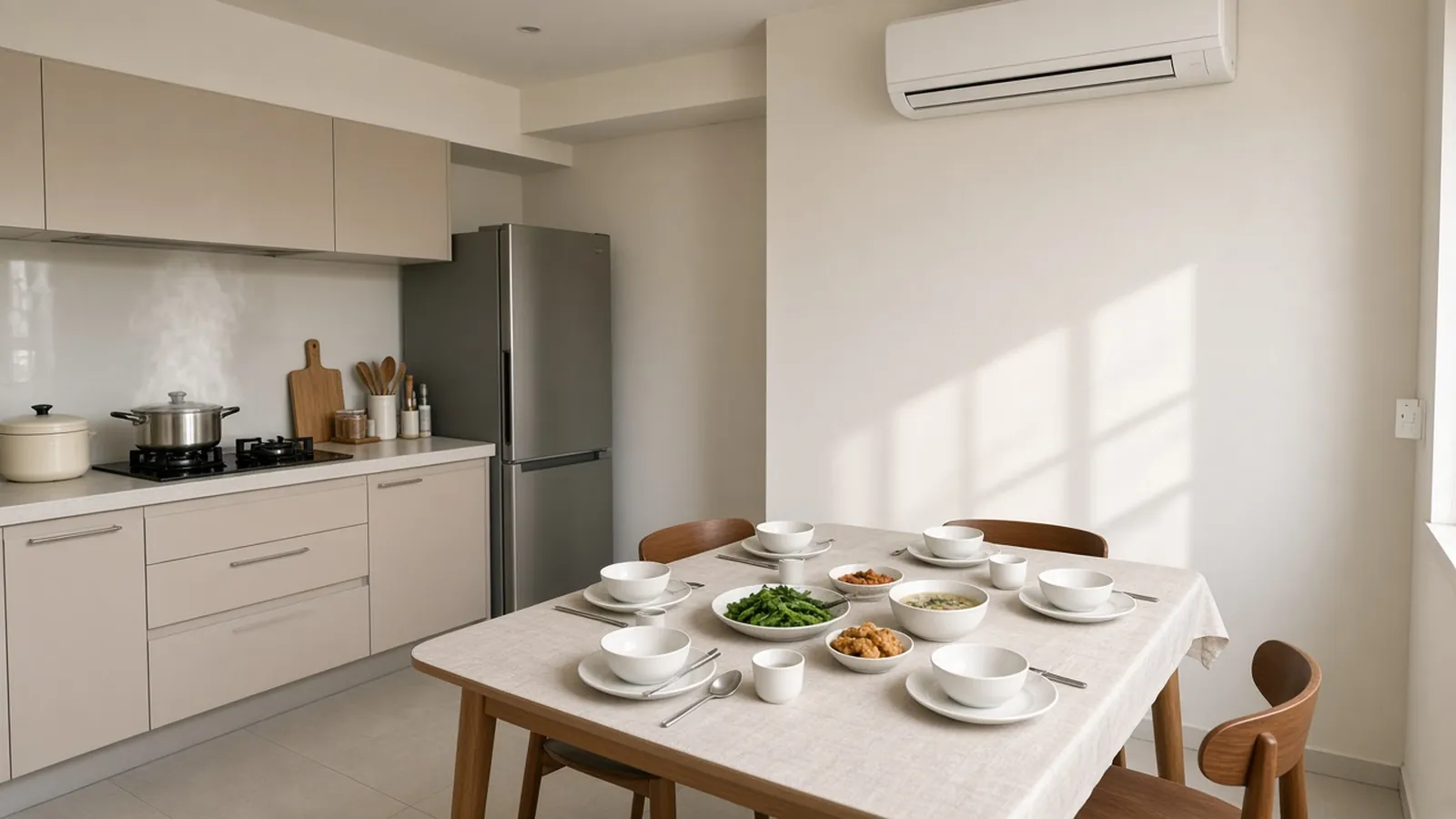
Some rooms just punish an aircon:
- A kitchen nearby, especially with open cooking. Oil mist travels farther than you'd think and it sticks to filters and coils.
- Windows facing a busy road or a construction site.
- Pets that shed.
- Running the unit with the windows open, which pulls in more outdoor dust.
- Renovation dust. Book a service after any works in the flat, even if the units were covered. Fine dust gets everywhere.
Humidity plays a part too. Indoor units make a lot of condensate as they cool moist air, and that water has to leave through the drain line. If the drain is partly blocked you get dripping or a sour smell even when the filter looks alright.
When to call before the schedule says so
Don't wait for the next booked visit if you notice any of these:
- Water dripping from the indoor unit.
- A musty or sour smell when it starts up.
- Weak airflow even with clean filters.
- The room takes much longer to cool than it used to.
- Ice on the pipes, or new noises from either unit.
Dripping is often a blocked drain line, which a general service usually sorts out. Smells and weak airflow tend to point to a dirty coil or blower, where a chemical wash or overhaul may be suggested. Weak cooling with ice on the pipes can mean low refrigerant, covered in our guide to gas top-up signs. It can also mean the unit is simply dirty, so it is worth asking the technician to check both.
Does a cleaner unit use less electricity?
A clean unit moves air more easily, so it usually doesn't have to work as hard. How much you save depends on how dirty it was to begin with, and we don't have a single figure that applies to every home. What we can point to is NEA's published advice on how you use the unit.
NEA suggests setting the temperature at 25°C, and says that for every degree you raise it you can save about 3% of utility costs. That estimate is based on electricity at $0.29 per kWh before GST, assuming a single-split 4-tick air-conditioner with 2.6 kW of cooling capacity, and it assumes that raising the set point by 1 degree reduces the air-conditioner's own electricity use by 10%. NEA also notes that the lower the temperature setting, the more energy the air-conditioner uses. Other tips on the same page include using a fan, running the aircon for about an hour then switching to a fan, setting the timer to switch off half an hour earlier, and closing curtains or blinds during the hottest part of the day. Those figures are NEA's, not ours, and they describe how you run the unit rather than how often you service it.
If you are thinking of replacing a unit rather than just servicing it, household air-conditioners sold in Singapore carry an NEA Energy Label. For single-phase air-conditioners the label rates efficiency from 1 tick (Low) to 5 ticks (Excellent). It also shows an estimated annual energy cost based on 27 cents per kWh, 8 hours of daily use and 16 hours of standby, with the disclaimer that actual energy consumption and cost may vary. NEA raised its Minimum Energy Performance Standards on 1 April 2025 to the 4-tick level for single-split air-conditioners and the 5-tick level for multi-split air-conditioners. That applies to models supplied from that date, not to a unit you already have on the wall. See NEA's Energy Label page and its overview of MELS and MEPS.
Should you sign a service contract?
A contract fixes the number of visits per year and saves you from remembering to book. It suits people with several units who want them done on a schedule. Before you sign, check how many visits are included, which jobs each visit covers, whether the outdoor units are part of it, and what happens if you need an extra call-out between visits. Compare it with simply booking one-off visits yourself.
Some contracts look generous until you realise a "visit" is only a general service and a chemical wash costs extra, or that the outdoor unit is left out. Ask for that in writing, the same way you would with a one-off quote. Our checklist on choosing a servicing company covers the questions that apply either way.
HDB ledges, grilles and access
In many HDB flats the outdoor condenser sits on a concrete aircon ledge, sometimes behind a grille. Before a visit, make sure the technician can reach it. If the grille needs a key, find it. Servicing that skips the outdoor unit because nobody could open the grille is a half-done job.
Routine servicing is different from installing or replacing a unit. If you are hanging a new condenser or moving one, HDB has its own rules, including the need for a BCA-trained installer. We cover that, with links to HDB's pages, in the guide on choosing a company.
Sources
- NEA, Energy Saving Tips by Appliance — check the filter once a month; service units regularly and get them inspected annually; set the temperature at 25°C, with the assumptions behind the "about 3% of utility costs" figure.
- NEA, The Energy Label — tick ratings from 1 (Low) to 5 (Excellent) for single-phase air-conditioners, and how annual energy cost is estimated.
- NEA, About MELS and MEPS — Minimum Energy Performance Standards raised on 1 April 2025 to 4-tick for single-split and 5-tick for multi-split air-conditioners.
When you are ready to book, find a company by area, by general servicing, or on the near-me map. There is also a shorter overview of all six common jobs.