Aircon companies in Singapore usually offer three levels of cleaning. A general service is the routine visit. A chemical wash goes deeper. A chemical overhaul goes deepest. The names sound alike and quotes can be hard to compare, so here is what each one involves.
There isn't a single official definition of these job names. Different firms use "chemical wash", "chemical cleaning" or "chemical overhaul" in slightly different ways. The only reliable method is to ask what they will actually do to your unit, and whether it stays on the wall.
General service, briefly
The technician opens the front panel, washes the filters, cleans the parts that can be reached and flushes the drain line. Many also wipe the casing and check that the remote still talks to the unit. It keeps a unit in decent shape, but it doesn't reach deep into the coil fins or the blower wheel, where most of the hidden dirt builds up.
This is the visit most people book on a schedule. Our guide on how often to service an aircon covers that rhythm, including NEA's advice to check the filter once a month and to have units serviced regularly.
Ask whether the visit includes flushing the drain and looking at the outdoor condenser. Those are the two steps most often skipped, and skipping them is how a "cheap service" turns into a unit that still drips a week later.
What happens in a chemical wash
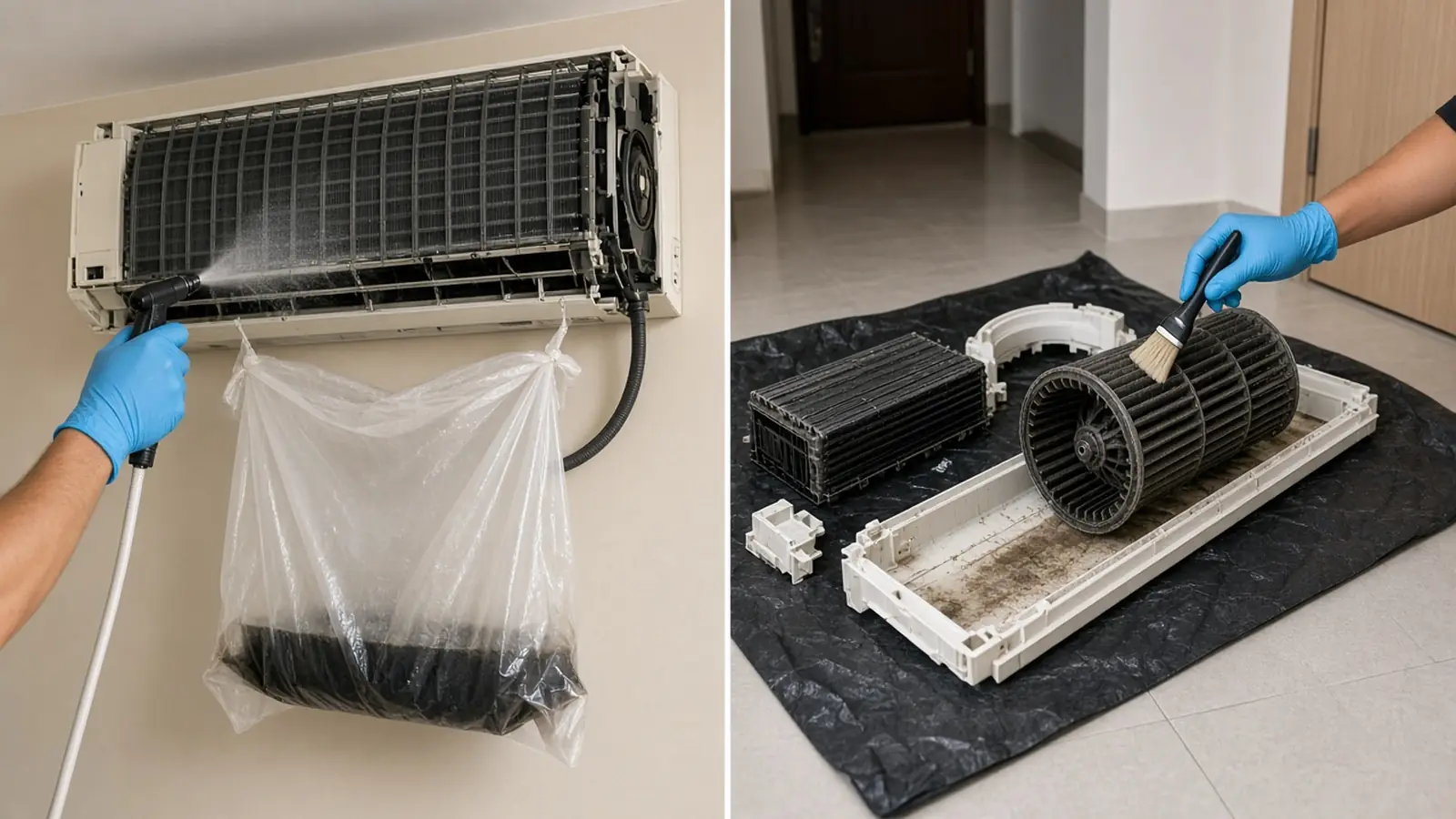
For a chemical wash, the indoor unit is opened further. Plastic covers and some parts come off, and a bag or tray is fitted to catch runoff. A cleaning solution goes onto the coil and often the blower, and is then rinsed through. The water that comes out is often surprisingly dark.
The unit generally stays mounted on the wall. That keeps the job shorter than an overhaul, but some areas inside still can't be reached. Dirt packed deep between coil fins, or slime on the back of a blower wheel, may be only partly cleared.
Some companies use the words "chemical wash" and "chemical cleaning" for the same thing, and some include the outdoor unit while others charge for it separately. Check which parts are covered before you compare two quotes.
People tend to book a wash when the air smells a bit musty, the airflow feels weaker even with clean filters, or it has been about a year since the last deep clean. A wash is not a repair. If the unit is leaking because a tray is cracked, or the blower is broken, cleaning alone will not fix that.
What happens in a chemical overhaul
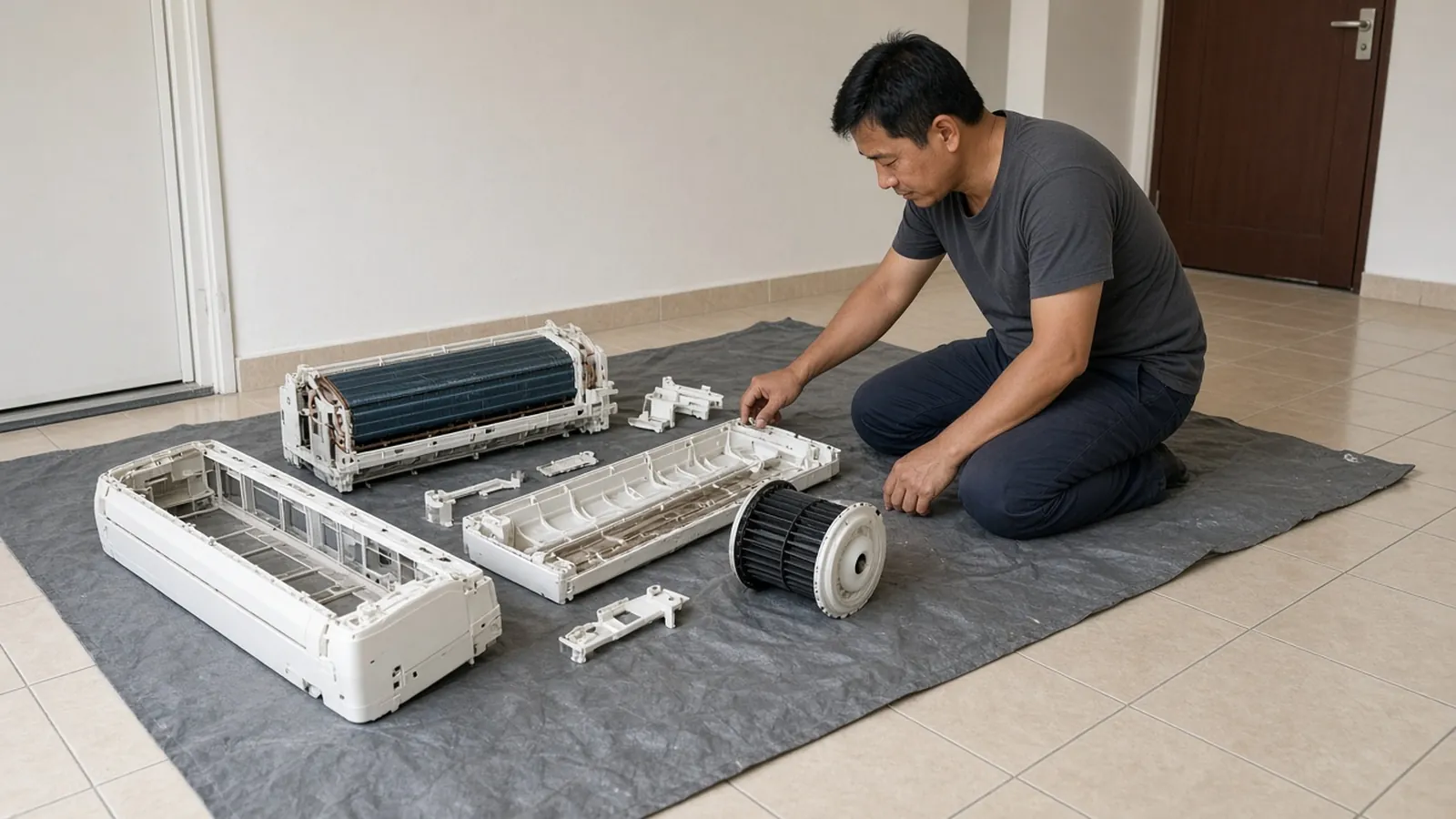
In an overhaul, the indoor unit is dismantled. Depending on the company and the model, it may be taken off the wall entirely. The coil, blower wheel, drain tray and casing are separated and soaked or scrubbed one by one, then reassembled and tested.
It is the most thorough clean on offer and takes the longest. Because the unit is taken apart, it is also the job where you most want a clear warranty on the work. A part that was already brittle, such as an old blower wheel, can crack while it is being cleaned. Ask what happens in that case before the work starts, not after the technician is holding the broken piece.
An overhaul makes more sense when a unit has gone several years without a deep clean, when there is visible mould or slime in the tray or on the blower, when water keeps leaking even after the drain has been cleared, or when black specks come out of the vents.
Which one does your unit need?
A chemical wash is often enough when:
- The unit has had general services but no deep clean for a year or so.
- There is a mild musty smell.
- Airflow feels a little weaker than it used to.
An overhaul is more often suggested when:
- The unit has gone several years without a deep clean.
- There is visible mould or slime in the drain tray or on the blower.
- Water keeps leaking even after the drain has been cleared.
- Black specks come out of the vents.
If you aren't sure, you don't have to decide on the phone. A good technician can look at the unit first and then explain what they see.
Ask to see the coil and blower
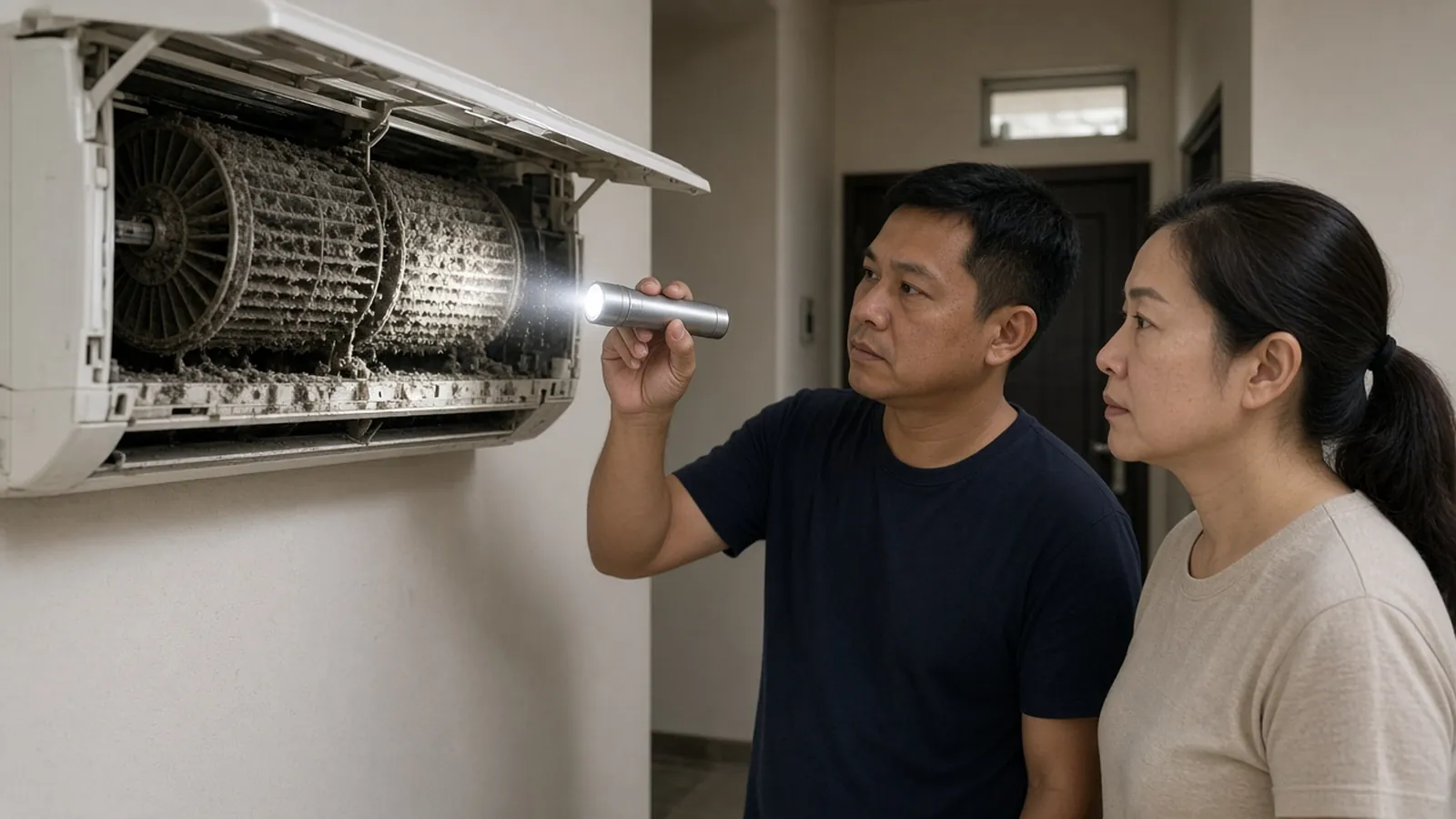
Before you agree to extra work, ask the technician to show you the coil and blower with a light. You are entitled to see the problem. A dirty blower looks furry or slimy. A neglected coil looks grey or matted between the fins rather than metallic. Photos on a phone are useful if you want a second quote later.
Be wary if someone opens the front panel for thirty seconds and immediately recommends an overhaul on every unit in the house, without showing you anything. The opposite is also true: if a unit really is packed with mould, a cheap wash that leaves most of it behind wastes the visit.
Wall-mounted units are the usual case in HDB bedrooms and many condo rooms. Ceiling cassettes and ducted units take more time to open and clean, and some companies price them as a different job. Say what type you have when you ask for a quote.
What to check in the quote
- Is the price per indoor unit, and is the outdoor unit included?
- For an overhaul, will the unit come off the wall?
- Is there a warranty on the work, and what does it cover?
- What happens if a part such as the blower is found to be cracked?
- Are chemicals rinsed out fully, and will they protect nearby furniture and the floor?
- How long should you keep the unit off after the job, if at all?
We don't publish prices in this guide because each company sets its own and they change often. Ask two or three companies to quote for the same job on the same units. If you want a sense of figures that companies have posted on their own websites, see our published prices page, which copies those numbers with a source and the date we checked. Treat them as a starting point, not as a quote for your flat.
Getting the home ready
A wash or overhaul is messier than a general service. Move beds, sofas and electronics away from under each indoor unit, or cover them. Keep pets in another room. Make sure there is space to lay a tarp if the unit is coming off the wall. And have the remotes ready so each unit can be tested when the technician is done.
When the work is finished, run each unit for a few minutes before the technician leaves. Check that it cools, that it doesn't drip, and that the smell has improved or at least hasn't got worse. If something seems off, say so while they are still there.
After the visit
Keep the receipt and note the date and the job that was done. A wash and an overhaul are easy to mix up six months later when you are booking the next visit. If a drip or a smell comes back within the warranty period, contact the same company first and give them a chance to return.
Cleaning will not fix low refrigerant. If the room still will not get cold after a thorough wash, read our guide to gas top-up signs and ask for a proper check rather than another round of chemicals.
Browse companies that list a chemical wash or a chemical overhaul on their own websites. You can also compare firms by area or on the near-me map. Our checklist on choosing a servicing company is useful once you know which job you want.