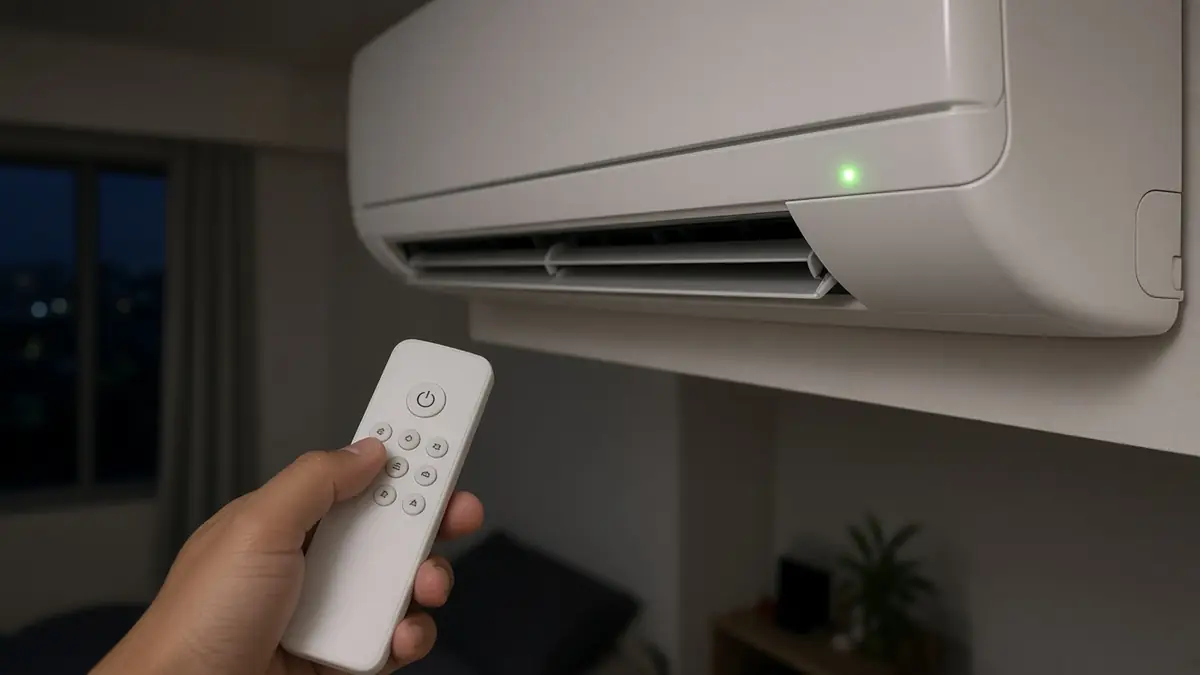
A blinking light on the indoor unit is how most aircons tell you something is wrong. It can look alarming, but it often means the system has protected itself. Here is what to check, in a safe order.
First, is it a normal blink?
Not every blink is a fault. Depending on the model, a light may flash or stay lit for:
- The timer or sleep mode being on.
- A filter-cleaning reminder.
- The unit warming up or defrosting.
- Receiving a signal from the remote.
Your user manual explains what each light means. Most manuals are also on the manufacturer's website, searchable by the model number on the unit's label.
Fault blinks
When the system detects a problem, it usually stops running and flashes a light in a pattern, or shows an error code on the display or remote. Each brand uses its own codes, so the same blink can mean different things on different units. Count the number of blinks between pauses and note which light is flashing. This helps a technician a lot.
Common causes include:
- A sensor reading out of range.
- The outdoor unit not responding, often an electrical or communication fault.
- Overheating, which can come from a very dirty outdoor coil or blocked airflow.
- A drain problem on units with a water level sensor.
- Low refrigerant pressure.
Safe checks you can do yourself
- Power reset. Switch the unit off at the isolator or breaker, wait a few minutes, then switch it back on. This clears many temporary faults.
- Check the remote. Replace the batteries and confirm the mode is cool, not fan or dry.
- Clean the filters. Very dirty filters can make a unit overheat or freeze.
- Look at the outdoor unit. Clear leaves, bags or items blocking it. Don't open it.
- Check for water. If water is pooling under the indoor unit, the drain may be blocked.
When to stop and call a technician
- The blinking returns after a reset.
- The breaker trips.
- You smell burning or see scorch marks.
- Ice forms on the pipes.
- The outdoor unit doesn't start at all.
Don't open the electrical panels or the outdoor unit. These carry mains voltage, and refrigerant work needs training and equipment.
What to tell the technician
Give them the brand and model from the label, the number of blinks and which light, the error code if shown, and what you've already tried. Many faults can then be narrowed down before the visit, which can save a second trip.
Preventing it next time
Regular servicing keeps filters, coils and drains clean, which removes several common causes of fault blinks. See how often to service your aircon.
Find a company for aircon repair and troubleshooting.